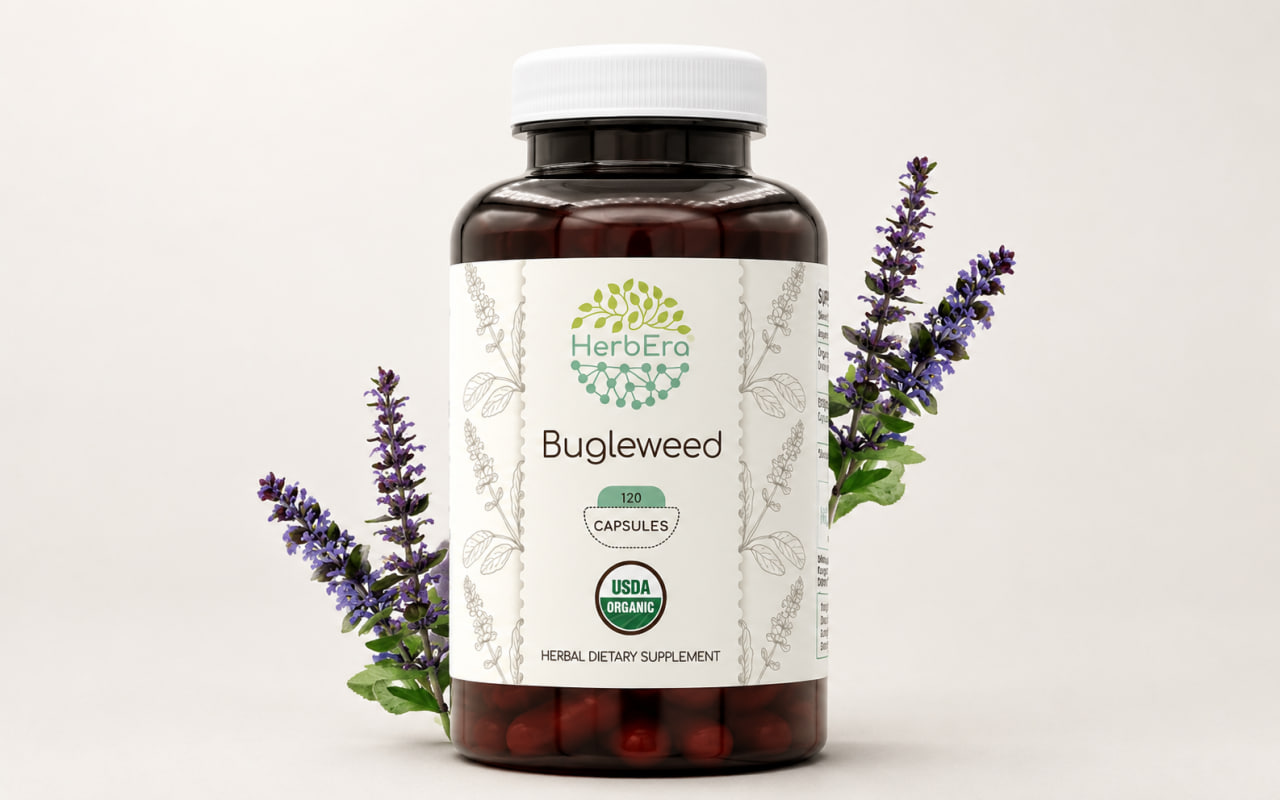
Bugleweed Capsules vs Bugleweed Tincture is a format question with a practical angle: you may want bugleweed, but not an alcohol-based liquid extract. Capsules and tinctures can both contain bugleweed, but they differ in base, taste, portability, serving consistency, label clarity, and how much measuring the user has to do.
Bugleweed usually refers to herbs in the Lycopus genus, including Lycopus virginicus and Lycopus europaeus. In supplement listings, you may see bugleweed dried herb, bugleweed extract, Lycopus virginicus dried herb, alcohol-based tincture, alcohol-free drops, or capsules. HerbEra’s bugleweed capsule context is useful here because it highlights a simple buyer concern: some shoppers want a plant-based capsule format instead of a liquid alcohol extract.
This guide compares bugleweed capsules and bugleweed tincture for alcohol-free routines, taste, convenience, serving control, travel use, ingredient simplicity, and medication-related caution.
What Is the Main Difference Between Bugleweed Capsules and Bugleweed Tincture?
The main difference is format. Bugleweed capsules usually contain dried herb powder or extract powder inside a capsule shell. Bugleweed tincture is a liquid extract, often made with alcohol, glycerin, water, or a blend of liquid carriers.
If you want to avoid alcohol, capsules may be easier to screen because they are usually dry supplements. Tinctures need closer label review because many traditional liquid extracts use alcohol as the extraction base.
The practical answer
Choose capsules if you want a dry, portable, low-taste format with simple serving control. Choose tincture only if the liquid base, serving directions, and alcohol status fit your routine.
Do not assume every tincture contains alcohol. Some liquid extracts are alcohol-free. Also do not assume every capsule is simple. A capsule can still contain fillers, flow agents, or a concentrated extract.
Are Bugleweed Capsules Alcohol-Free?
Bugleweed capsules are generally a better starting point for people avoiding alcohol because they are not liquid tinctures. A capsule product may contain dried herb powder, extract powder, or another dry preparation. Still, the label should confirm the full ingredient list.
Look at the Supplement Facts and other ingredients. Check the capsule material, botanical name, plant part, serving size, and any processing language.
What to verify
Look for words such as capsule, dried herb, powder, vegetable capsule, gelatin capsule, extract powder, and other ingredients. If the product description says alcohol-free, check whether that claim appears on the current bottle or seller documentation.
If strict alcohol avoidance matters to you, ask the brand whether alcohol is used at any stage of extraction or processing.
Does Bugleweed Tincture Always Contain Alcohol?
No. Bugleweed tincture does not always contain alcohol, but many traditional tinctures are alcohol-based. Other liquid extracts may use vegetable glycerin and water and may be labeled alcohol-free.
The word “tincture” is often used loosely in online listings. Some sellers use it for alcohol extracts. Others use it for alcohol-free drops. That is why the liquid base is one of the first things to check.
Liquid base terms to scan
Look for alcohol, ethanol, organic cane alcohol, grain alcohol, glycerin, vegetable glycerin, purified water, alcohol-free, glycerite, or liquid extract.
If the label does not clearly state the base, ask before buying. Do not guess from the bottle color or dropper style.
Bugleweed Capsules vs Bugleweed Tincture: Quick Comparison
The best format depends on why you are comparing them. For alcohol avoidance, capsules often make the decision easier. For people who dislike swallowing capsules, a liquid extract may be more convenient if the base is acceptable.
| Feature | Bugleweed capsules | Bugleweed tincture |
|---|---|---|
| Alcohol-free fit | Often easier to screen as a dry format | Must check alcohol, glycerin, or water base |
| Taste | Usually little taste unless capsule opens or causes aftertaste | Herbal taste is direct and may be strong |
| Serving control | Count capsules | Measure drops, dropperfuls, or milliliters |
| Portability | Easy to pack, low leak risk | Dropper bottle can leak or break |
| Ingredient simplicity | May be simple if single-herb powder | Base and extraction method add more variables |
| Best for | People who want dry format and less measuring | People who prefer liquid drops and have checked the base |
Neither format is automatically better. The better option is the one whose label you can understand and follow without improvising.
Which Format Is Better If You Want to Avoid Alcohol?
Capsules are usually the simpler choice for an alcohol-free routine because they are dry and do not require a liquid carrier. A capsule label may still need verification, but it normally avoids the main concern tied to alcohol-based tinctures.
If you prefer liquid drops, look for alcohol-free wording and a base such as vegetable glycerin and water. A liquid extract can be alcohol-free, but the label needs to say so clearly.
Best default for strict avoidance
If strict alcohol avoidance is non-negotiable, choose a format that states alcohol-free clearly and ask the seller if the processing history matters to you.
For capsules, ask whether the product is dried herb powder or extract powder. For tinctures, ask whether the base is alcohol, glycerin, water, or another carrier.
Which Format Has Less Taste?
Bugleweed capsules usually have less taste because the herb is enclosed inside a capsule shell. You may notice a faint herbal smell when opening the bottle, but the taste is usually less direct than drops.
Bugleweed tincture exposes the mouth and throat to the liquid. Depending on the base, it may taste bitter, herbal, earthy, sharp, sweet, or warming.
When taste matters
Choose capsules if you dislike strong herbal flavors or do not want a liquid aftertaste. Choose tincture only if you are comfortable with drops or can dilute them as the label allows.
Do not use taste as proof of quality, strength, or suitability. Taste is only a user-experience factor.
Which Format Gives Better Serving Consistency?
Capsules usually give easier serving consistency because each serving is counted. If the label says one or two capsules, the user does not need to count drops or interpret a dropper.
Tinctures can also be consistent when the label gives clear measurements and the user follows them carefully. But drops can vary with viscosity, dropper design, angle, and user technique.
Less measuring vs more flexibility
Capsules reduce measuring. Tinctures may offer more flexible serving adjustments when the label provides clear directions. That flexibility can become a problem if the user starts guessing.
For beginners, capsules are often easier to follow because the serving is already portioned.
Capsules vs Tincture for Travel
Bugleweed capsules are usually easier for travel. They are less likely to leak, easier to count, and simpler to keep in a bag. Keep them dry, sealed, and away from heat.
Bugleweed tincture needs more protection. A glass dropper bottle can leak, crack, or lose label clarity in a travel bag. If flying, it may also fall under liquid rules.
| Travel concern | Capsules | Tincture |
|---|---|---|
| Leak risk | Low | Higher due to liquid and dropper cap |
| Heat exposure | Still important | Important for liquid quality and bottle pressure |
| Airport liquid rules | Usually simpler | May need liquids bag or size check |
| Serving on the road | Count capsules | Measure drops carefully |
| Label visibility | Keep original bottle | Keep original labeled dropper bottle |
For travel, the original package matters. It keeps the product name, serving directions, warnings, lot number, and expiration date available.
What Ingredient Details Should You Compare?
Compare the full label, not just the format. For bugleweed, check the botanical name, species, plant part, form, serving size, other ingredients, and warnings.
Look for Lycopus virginicus, Lycopus europaeus, Lycopus spp., dried herb, aerial parts, extract, powder, capsule shell, alcohol, glycerin, water, and suggested use.
Species and plant part
Bugleweed is a common name. It may appear with different Lycopus species. If a capsule says Lycopus virginicus dried herb and a tincture says Lycopus europaeus extract, those are not identical labels.
HerbEra’s dried-herb capsule context shows why this matters: capsule shoppers may be comparing a plant-powder format against liquid extracts that use different species, bases, or preparation methods.
What If the Capsule Is Dried Herb and the Tincture Is an Extract?
Dried herb and extract are different forms. Dried herb powder is ground plant material. Extract is made by pulling components from plant material into a liquid carrier or producing a concentrated extract preparation.
You cannot compare capsule milligrams and tincture drops directly unless the labels provide enough detail. The serving systems are different.
What to ask
Ask whether the capsule contains dried herb powder or extract powder. Ask whether the tincture is alcohol-based or alcohol-free. Ask which Lycopus species and plant part are used.
A clear comparison needs species, plant part, form, amount, base, and serving directions.
What If You Take Thyroid Medication?
If you take thyroid medication or have a thyroid condition, ask a qualified healthcare professional before using bugleweed in any format. This includes capsules, tinctures, alcohol-free extracts, teas, powders, and blends.
Bugleweed is often discussed in thyroid-related contexts, and interaction references advise caution with thyroid hormone medications and thyroid disorders. Format does not remove that concern.
Format does not cancel safety review
An alcohol-free capsule is not automatically appropriate with thyroid medication. An alcohol-free tincture is not automatically appropriate either.
Bring the exact product label, your medication list, thyroid diagnosis, recent lab results, and other supplements to your pharmacist or clinician.
Who Should Ask Before Using Either Format?
Ask a qualified healthcare professional before using bugleweed capsules or tincture if you are pregnant, nursing, trying to conceive, taking medication, managing a thyroid condition, preparing for surgery, buying for a child, or using multiple supplements.
Use extra caution if you have hypothyroidism, hyperthyroidism, Graves disease, Hashimoto thyroiditis, thyroid nodules, thyroid surgery history, abnormal TSH, unstable thyroid labs, or recent thyroid medication changes.
No self-directed thyroid routines
Do not use bugleweed capsules or tincture as a replacement for professional thyroid evaluation, lab monitoring, or prescribed medication.
Do not start, stop, or change thyroid medication because of a supplement label, customer review, or article.
What Label Red Flags Should You Notice?
Red flags include no botanical name, no plant part, unclear species, no Supplement Facts image, no serving size, missing warnings, vague proprietary blend, no alcohol-status information for liquid products, unreadable expiration date, or broad medical claims.
Also avoid products with damaged packaging, broken safety seal, leaking tincture, cracked dropper, sticky capsules, moisture exposure, moldy smell, or unreadable labels.
For tinctures
Check whether the liquid base is listed. If the product is called alcohol-free, look for the carrier ingredients that explain how it is made.
If the bottle arrived leaking or the dropper is cracked, do not use it.
For capsules
Check whether the capsule contains dried herb powder or extract. Look for the capsule shell and any added ingredients.
If capsules are wet, sticky, swollen, clumped, or smell off, do not use them.
Which Format Should You Choose?
Choose bugleweed capsules if your top priorities are alcohol avoidance, low taste, easy travel, and simple serving control. Choose bugleweed tincture if you prefer liquid drops and have confirmed the liquid base, serving directions, and label warnings.
If you take thyroid medication or have thyroid history, do not choose either format without professional review.
Decision rule
Buy only the product whose label answers your key questions: species, plant part, form, alcohol status, serving, frequency, warnings, storage, lot number, and expiration date.
If the label leaves you guessing, ask before buying.
Checklist: How to Compare Bugleweed Capsules vs Bugleweed Tincture
Use this checklist before choosing a bugleweed format. It focuses on alcohol-free fit, serving consistency, taste, portability, ingredient clarity, and medication caution.
Check alcohol status
For tinctures, look for alcohol, ethanol, glycerin, water, alcohol-free, or glycerite wording. For capsules, confirm the full ingredient list if strict alcohol avoidance matters.
Identify the species
Look for Lycopus virginicus, Lycopus europaeus, or Lycopus spp. Do not rely only on the common name bugleweed.
Confirm the plant part
Check for dried herb, aerial parts, leaf, flowering tops, powder, or extract. Ask the seller if the plant part is missing.
Compare serving control
Capsules are counted. Tinctures are measured in drops, droppers, or milliliters. Choose the format you can use accurately.
Consider taste
Capsules usually hide taste better. Tinctures deliver the herbal flavor directly unless diluted as allowed by the label.
Think about travel
Capsules are easier to pack. Tinctures need leak protection, dropper protection, and visible labeling.
Review thyroid context
Ask a qualified healthcare professional before using either format if you take thyroid medication or have thyroid history.
Inspect product condition
Do not use a product with broken seal, damaged bottle, leaking liquid, sticky capsules, off smell, expired date, or unreadable label.
FAQ
Are bugleweed capsules better than bugleweed tincture if I avoid alcohol?
Capsules are often easier for alcohol avoidance because they are a dry format, but you should still review the full ingredient list.
Does bugleweed tincture always contain alcohol?
No. Some liquid extracts are alcohol-free, but many traditional tinctures are alcohol-based. Check the liquid base.
What is an alcohol-free bugleweed tincture?
It is a liquid extract made without alcohol as the main carrier, often using glycerin and water.
Do capsules and tinctures use the same bugleweed?
Not always. Compare the species, plant part, and form. One product may use dried herb, while another uses extract.
Which format has less taste?
Capsules usually have less taste because the herb is enclosed in a capsule shell.
Which format is easier to measure?
Capsules are usually easier because you count them. Tinctures require drops, droppers, or milliliter measurements.
Which format is easier for travel?
Capsules are usually easier for travel because they do not leak and are simple to count.
Can I use bugleweed if I take thyroid medication?
Ask a qualified healthcare professional before using bugleweed in any format if you take thyroid medication.
What should I ask before buying?
Ask about species, plant part, dried herb vs extract, alcohol status, serving size, warnings, and whether the format fits your medication context.
Glossary
Bugleweed
A common name for certain herbs in the Lycopus genus used in supplement products.
Lycopus
The botanical genus that includes species such as Lycopus virginicus and Lycopus europaeus.
Bugleweed capsule
A dry supplement format that contains bugleweed powder, extract powder, or another dry preparation inside a capsule shell.
Bugleweed tincture
A liquid bugleweed extract made with a carrier such as alcohol, glycerin, water, or a blend.
Alcohol-based tincture
A liquid extract that uses alcohol as a main extraction or carrier base.
Alcohol-free extract
A liquid extract made without alcohol as the main carrier, often using glycerin and water.
Glycerite
An alcohol-free liquid extract that uses glycerin as a major carrier.
Dried herb
Dried plant material used in capsules, teas, powders, or extracts.
Serving control
The ease of using the correct label amount without guessing or over-measuring.
Supplement Facts
The label panel that lists serving size, dietary ingredients, and amounts per serving for a supplement.
Conclusion
Bugleweed Capsules vs Bugleweed Tincture comes down to alcohol status, taste, serving control, portability, and label clarity. Capsules often fit alcohol-free routines more easily, but either format needs careful label review and professional guidance when thyroid medication or thyroid history is involved.
Sources Used
Pharmacist-reviewed bugleweed interaction and thyroid caution context, Bugleweed Herbal Information – HelloPharmacist
Pharmacist-reviewed interaction context for bugleweed with levothyroxine, Bugleweed and Levothyroxine Interaction Details – HelloPharmacist
Consumer supplement overview and safety context for bugleweed, Bugleweed Overview – WebMD
Marketplace listing context showing bugleweed capsules and alcohol-free tincture formats, Bugleweed Herb Listings – Walmart
Example of alcohol-based bugleweed tincture market language, Bugleweed Extract Tincture – Trifecta Botanicals
General dietary supplement labeling guidance, Dietary Supplement Labeling Guide – FDA
General supplement label nutrition rule context, Nutrition Labeling of Dietary Supplements – Electronic Code of Federal Regulations